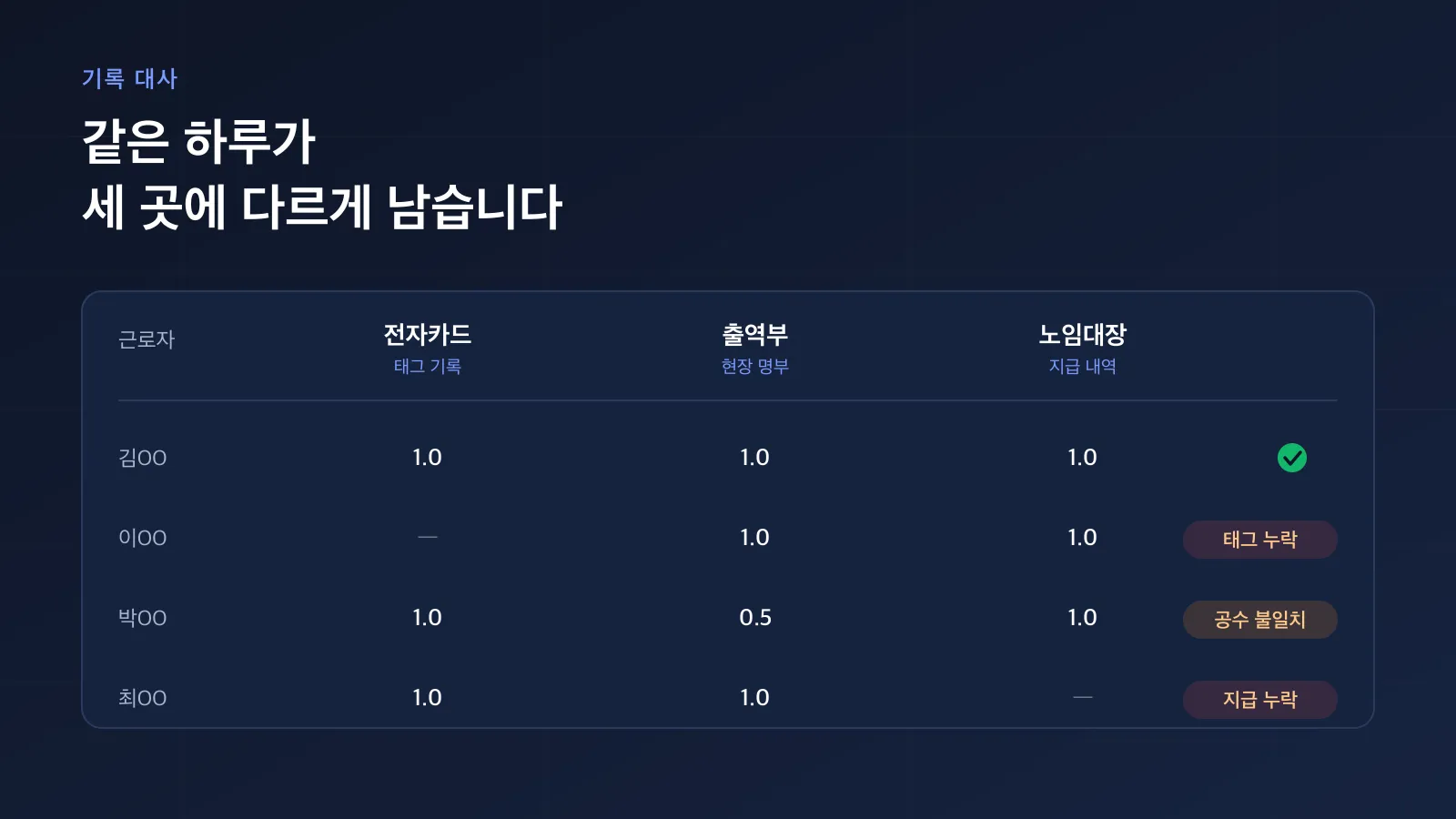
Korea's electronic card system for construction workers is moving up a gear. Until now, the employer's duty to install an electronic card terminal sat only in a presidential decree. An amendment to the Act on the Employment Improvement of Construction Workers, which writes that duty into the statute itself and attaches a fine for breaching it, passed the National Assembly in June 2026.
Only one thing changes, but the weight is different. What was closer to guidance becomes an obligation with a penalty behind it.
What changes
The amendment comes down to three points.
- The employer's duty to install an electronic card terminal moves from presidential decree into the statute
- Breaching it carries a fine of up to 3 million won
- Small-scale works, and sites where installing a terminal is impractical, may use a mobile application instead
It takes effect six months after promulgation. Having passed in June 2026, that means early 2027. The time between now and then is the preparation window.
The detailed test for what counts as a site "where installation is impractical" will be set in subordinate legislation. It is too early to conclude that your site qualifies for the app substitute, so it is safer to plan around a terminal by default.
Does it cover our site?
The scope of the electronic card system matches the works covered by the retirement deduction scheme. That scope widened considerably from January 2024.
- Public works: estimated contract value of 100 million won or more
- Private works: estimated contract value of 5 billion won or more
That widening took the number of covered sites from roughly 9,000 in 2023 to around 80,000 in 2024. If your site once checked the old threshold and concluded it did not apply, it is worth checking again. The 100 million won threshold for public works in particular takes in far more sites than people expect.
Installing the terminal is not where it ends
This is where the practical work starts. Install a terminal, have workers tap their cards, and the duty is met. Whether that record agrees with the site's other records is a separate question.
Situations that come up regularly:
- A name appears on the attendance sheet with no matching card tap that day
- The tap is there, but the man-days recorded differ from the daily attendance report
- The days worked on the electronic card record do not match the days worked on the payroll ledger
- Some subcontractor crew members missed their taps and the month rolled over before anyone noticed
These gaps usually surface just before month-end close or a retirement-deduction filing. By then the workers have often left the site and there is no practical way to confirm anything. People end up reconciling from memory, and a record reconciled that way is hard to rely on as evidence later.
Catching the gaps before close
The terminal is the minimum the law asks for. What a site actually needs is a daily check that the record agrees with its other records.
What matters is that this check runs a little every day rather than piling up at month end. One day's discrepancy can be settled by asking the worker; a month's worth cannot be settled at all.
What to do during the preparation window
Worth confirming while there is still time before it takes effect:
- Which of your live and upcoming sites fall within scope
- Whether each site has a terminal, and if not, when one will be installed
- Whether taps are actually happening down to the subcontractor crews
- Whether anyone has ever cross-checked the card records against attendance and payroll
There is also a terminal rental support programme in operation. Eligibility and terms change from year to year, so the Construction Workers Mutual Aid Association's own notices are the accurate source.
This is the point CONNECTIN is looking at with ilyongyee, our smart site operations solution. Not replacing the electronic card, but making it possible to confirm before close that taps, attendance, man-days and wages all agree, using verified work records as the reference. Once a day on site is left as accurate data, the filings and settlements built on top of it stop needing to be reconciled separately.